

Porting Your Mortgage Explained: How It Works When Moving Home in the UK

In this guide, we explain how porting a mortgage works in the UK, how lenders assess applications and what to consider before relying on it when moving home.
What Does Porting a Mortgage Mean?
Porting a mortgage means transferring your existing mortgage product from your current property to a new one.
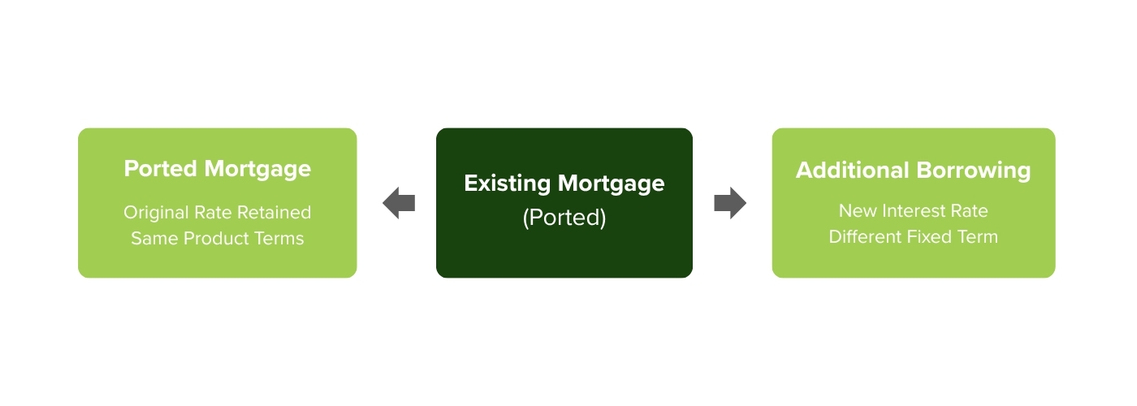
This allows you to keep your current interest rate and product terms, rather than switching to a new deal.
However, porting is not automatic. It involves submitting a new mortgage application, and your lender will reassess your circumstances as if you were applying again.
This typically includes reviewing:
- Your income and employment
- Your credit profile
- Your affordability
- The suitability of the new property
Approval is based on the lender’s criteria at the time of the new application, not when you originally took out the mortgage.

Why Do People Consider Porting?
Porting is most commonly considered when you are still within a fixed rate or incentive period.
There are several reasons why this may be beneficial.
Avoiding Early Repayment Charges
If you repay your mortgage during a fixed rate period, you may incur early repayment charges. These are often calculated as a percentage of the remaining loan and can be significant.
Porting may allow you to move home without triggering those charges, provided the lender approves the application.
Keeping a Competitive Interest Rate
If your current mortgage rate is lower than what is available on the market, porting could allow you to retain that rate.
This may help keep your monthly repayments lower, at least on the portion of the loan that is ported.
In some cases, borrowers may also look at ways to reduce their mortgage balance over time, particularly when they are on a competitive rate. This can include making voluntary overpayments, although terms and limits vary between lenders. Further information on this can be found in our guide to How Mortgage Overpayments Work.
Borrowing More When Porting
If you are moving to a more expensive property, you may need to borrow additional funds.
In many cases, this additional borrowing is arranged as a separate mortgage product.
This can mean:
- A different interest rate on the additional borrowing
- A different fixed rate period
- A different product end date
As a result, your mortgage could be split into multiple parts (often called sub-accounts), each with its own terms.
This can add some complexity, particularly when different parts of the mortgage end at different times. Understanding how these products work together is important before proceeding.
When Might Porting Not Be Approved?
Porting is subject to lender approval and may not always be possible.
Common reasons why a porting application may be declined include:
- Changes to your income or employment
- Changes to your credit profile
- Affordability no longer meeting lender requirements
- The new property not meeting the lender’s criteria
Because of this, it is important not to assume porting will be approved without checking first.
The type and intended use of the property can also affect lender decisions. For example, properties intended for short-term or holiday letting may be assessed differently to standard residential homes. Further details on this topic are outlined in our guide to Holiday Let Mortgages in the UK.
How Lenders Assess a Porting Application
Even though you are an existing customer, lenders will usually carry out a full reassessment.
This means they will:
- Review your current financial situation
- Recalculate affordability based on current criteria
- Assess the new property against lending policies
Lending criteria can change over time, so meeting the requirements previously does not guarantee approval now.
How to Approach Porting Your Mortgage
If you are considering porting, planning ahead can help reduce the risk of delays or complications during your move.
Key steps to take include:
Understand Your Early Repayment Charges
Check your mortgage documents or speak to your lender to confirm:
- Whether early repayment charges apply
- How much they could be
- Whether porting would avoid them
Review Your Affordability
Speak with your lender or a mortgage adviser to understand:
- How much you may be able to borrow now
- Whether your current circumstances meet lending criteria
- What additional borrowing you may need
Allow Time for the Application Process
Porting still requires underwriting and approval.
Allow enough time for:
- Application processing
- Property valuation
- Final approval
This can help prevent disruption to your home move.
Key Takeaways
- Porting allows you to transfer your existing mortgage product to a new property
- A full reassessment is required, based on current lender criteria
- Approval is not guaranteed
- Additional borrowing may be on a separate product with different terms
- Planning early can help improve your chances of a smooth process
Download Our Mortgage Porting Checklist
If you are thinking about porting your mortgage, having a clear understanding of what lenders assess can help you prepare.
Our Mortgage Porting Checklist outlines the key factors lenders consider, helping you plan ahead and reduce uncertainty during your move.
Complete the form below to download your copy.
Need help with porting your mortgage?
Speak to a mortgage adviser to understand your options and what may be possible based on your circumstances. Get in touch to start the conversation.
Frequently Asked Questions About Porting a Mortgage
Can you port any mortgage in the UK?
Not all mortgages are portable. Whether you can port depends on your lender and the specific mortgage product.
Do you need to reapply to port a mortgage?
Yes. Porting requires a new application, and lenders will reassess your income, affordability, credit profile and the new property.
Can porting a mortgage be declined?
Yes. Porting is not guaranteed and may be declined if you no longer meet the lender’s criteria or if the new property is unsuitable.
Can you borrow more when porting?
Yes, but additional borrowing is usually arranged on a separate product, subject to affordability.
Important Information
Porting is subject to application, status and lender criteria.
Additional borrowing may be subject to different rates and terms.
Mortgage advice should be tailored to your individual circumstances.
This content is for informational purposes only and does not constitute personalised financial advice.